
The draw for the 2027 AFC Asian Cup was unveiled over the weekend in Riyadh, Saudi Arabia, officially kicking off China’s preparation for the tournament. While many view China’s group as a favorable one, new head coach Shao Jiayi remains cautious, stating, “No matter the draw, every match for us is a tough battle.”
According to the latest FIFA rankings as of April 1, China was placed in Pot 3 as the 95th-ranked team in the world and 15th in Asia. The team landed in Group C alongside Iran, Syria, and Kyrgyzstan. Many observers noted that China avoided top-tier Asian sides such as Japan, South Korea, and Australia, and face relatively manageable opponents in Syria and Kyrgyzstan, making this a promising group.

Objectively, the draw is indeed favorable. While Iran presents a significant challenge, Syria is considered weaker among second-pot teams, and Kyrgyzstan—though stronger among fourth-pot teams—still offers China a realistic chance to compete. Both opponents are closer to China’s level, leaving room for any outcome. In contrast, four of the teams in Pot 2 have qualified for the World Cup, which would have made advancement far more difficult.
Since 2004, the Asian Cup has expanded to 16 teams, and from 2019 onward to 24, with the top two from each group and the four best third-placed finishers advancing to the round of 16. Even so, Shao Jiayi stressed that China should not overestimate its chances. “Given our current overall strength, we aren’t yet in a position to actively challenge strong teams,” he said. “So regardless of the draw, we have to face the tests of Asia’s top sides head-on.”

“Iran has been a traditional powerhouse in Asia for decades and a regular at the World Cup. Syria has been consistent in both the Asian Cup and World Cup qualifiers, with their strength rising in recent years. Kyrgyzstan has also made steady progress, qualifying for major tournaments in the last two editions. So this is a highly challenging group. But I believe that with six to seven months of systematic preparation, we will be well-prepared and give our all in the Asian Cup,” Shao added.
Although China avoided four World Cup-bound teams in Pot 2, their opponents—Iran, Syria, and Kyrgyzstan—are all physical, high-intensity teams that China has historically struggled against. When asked about countering such opponents, Shao stressed the need to confront reality. “First, we must honestly acknowledge our disadvantages in physicality and athleticism. Then we need to find our path forward—relying on team cohesion and tactical coordination to compensate for individual shortcomings and compete against these powerful opponents through collective football,” he said.
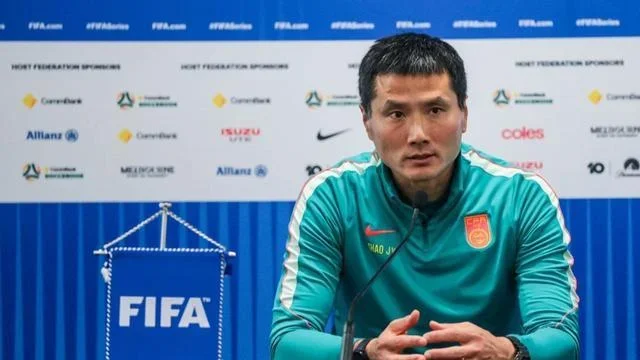
Shao revealed that from June onward, the team will hold training camps and matches in June, September, October, and November. By December, they will enter a specialized pre-Asian Cup preparation phase to gradually refine the squad and tactics. “Subsequent international friendlies and training sessions will be more targeted. During this preparation cycle, we will specifically focus on the technical styles and physical characteristics of our group opponents, deliberately seeking out similar physical teams for practice to adapt to the intensity and pace of the tournament and build real-match readiness.”
Despite setbacks in World Cup qualifying, China has a strong Asian Cup history. Since their debut in 1976, this will be their 14th consecutive participation in the tournament—a streak surpassed only by Iran and South Korea (16 each). China has finished as runners-up twice and third-placed twice. In this group, if they can avoid repeating past mistakes, advancing to the round of 16 or even challenging for a quarterfinal spot next year is a realistic goal.