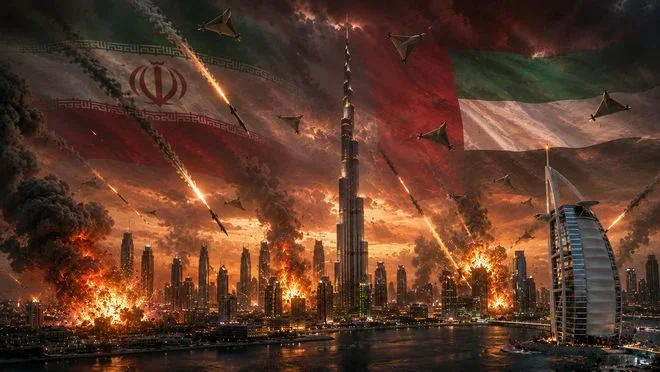
During the ongoing US-Iran conflict, the UAE has been hit by an unusually high number of missile and drone strikes—surpassing most Gulf states and even Israel at times. Even after a temporary ceasefire, Iran launched fresh drone and missile attacks on the UAE’s Fujairah oil industrial zone on May 4 and May 10. In a rare move, Iran’s Revolutionary Guards publicly warned the UAE, stating that if it continues to serve as a “forward base for the US and Israel,” it will pay “unforgettable consequences.”
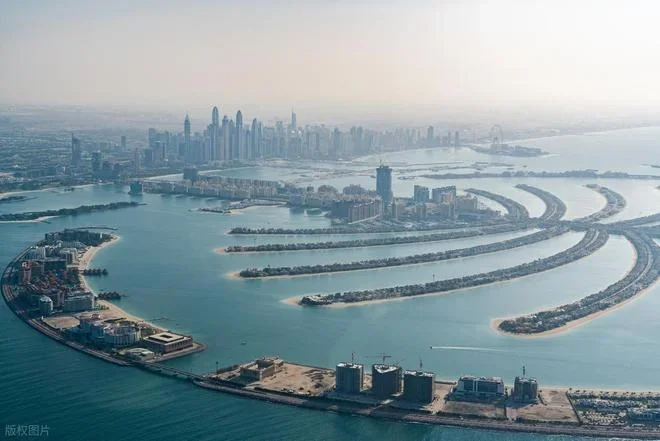
Why Iran focuses its firepower on a small Gulf nation? The answer lies in the UAE’s unique makeup. It’s not a traditional regional power like Saudi Arabia or Iran. Formed in 1971 as a loose federation of seven emirates, the UAE has always been a “joint venture” for survival. Its population today tops 10 million, but only 12% hold citizenship. Most residents are expats—laborers, businesspeople, and professionals from India, Pakistan, and beyond. This makes it difficult to rally national identity around religion, ethnicity, or history.
The UAE has long lived under the shadow of Iran and Saudi Arabia. Iran represents a security threat—religious differences (Sunni vs. Shiite), territorial disputes over islands, and Iran’s support for proxy forces all stoke fear. Saudi Arabia, meanwhile, provokes anxiety over leadership: as the core of Gulf order, Saudi’s influence in religion, population, and oil far outweighs the UAE, creating a constant tug-of-war over energy, finance, and ports.
So the UAE’s survival logic is simple: it can’t compete on land, so it competes at sea. It has become a “maritime commercial state,” prioritizing shipping, finance, trade, and global capital. Dubai’s rise as a hub for oil, Indian labor, African resources, European capital, and Chinese goods is a perfect example. Think of the UAE as the “Singapore of the Middle East”—earning its keep by connecting the world and charging “tolls” for passage.
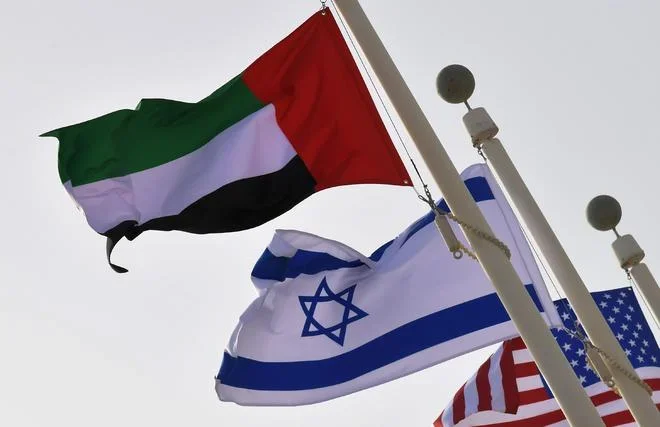
This pragmatic, commercial-first approach has made the UAE the most de-ideologized nation in the Gulf. It doesn’t preach anti-Israel rhetoric or Arab nationalism. Instead, it practices a flexible multi-alignment: cozy up to the US, cooperate with China, befriend India, and even leverage Israel. But that doesn’t mean it’s passive. The UAE has intervened in Syria, Yemen, Libya, and Sudan—often backing factions that serve its own interests, not just the broader Arab cause. It’s building a chain of ports across the Horn of Africa, from Djibouti to Somaliland, and has established military bases far beyond the Gulf’s traditional reach. This aggressive expansion worries Tehran.
Iran sees the UAE as a growing threat—not just as a US proxy, but as a strategic competitor. The UAE hosts the US’s Al Dhafra Air Base, which has become a forward operating hub for airstrikes on Iran. It has also integrated Israel into its security apparatus since the Abraham Accords, including sharing real-time intelligence on