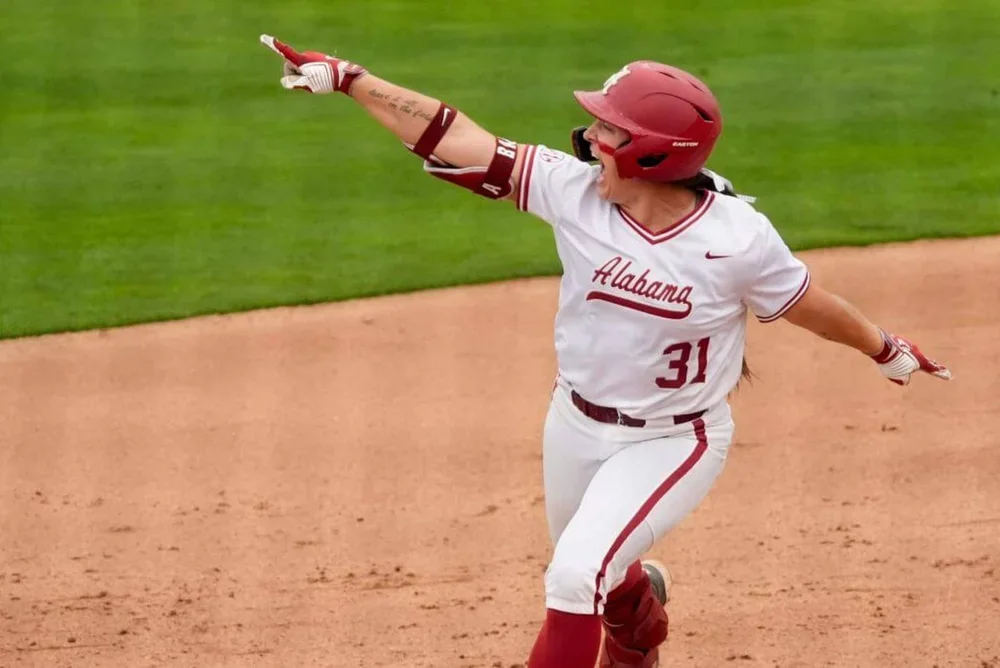
Alabama secured the No. 1 overall seed in the NCAA softball tournament for the first time since 2010 and only the second time in program history on Sunday. The Crimson Tide, led by SEC Pitcher of the Year Jocelyn Briski and first-team all-conference slugger Brooke Wells, posted a 49-7 record. They were ranked No. 2 in the RPI and No. 17 in strength of schedule entering Selection Sunday.
Although Alabama remained in the top five nationally throughout the season, a dominant run in the SEC tournament—until they lost to Texas in the championship—pushed them to the top spot. Oklahoma, which ended the regular season at No. 1, surprisingly fell to Georgia in the SEC tournament quarterfinals and received the No. 3 seed.
Texas, which began the year tied at No. 1 in the preseason rankings, was awarded the No. 2 seed. The reigning national champion Longhorns struggled late in conference play but captured their first SEC tournament title after a stunning performance from ace Teagan Kavan against Alabama. Texas holds a 42-10 record and was ranked No. 4 in the RPI and No. 5 in strength of schedule heading into Sunday.
The SEC earned six of the top eight national seeds. The complete top eight: No. 1 Alabama, No. 2 Texas, No. 3 Oklahoma, No. 4 Nebraska, No. 5 Arkansas, No. 6 Florida, No. 7 Tennessee, and No. 8 UCLA.
The other eight regional hosts (seeds 9–16) are Florida State, Georgia, Texas Tech, Duke, Oklahoma State, Oregon, Texas A&M, and LSU. Virginia Tech notably missed out on hosting after reaching the ACC tournament title game, where the Hokies lost to Florida State.
Georgia Tech, Indiana, Marshall, and Michigan were the last four teams to make the field, while North Carolina, Northwestern, Nevada, and Wichita State were the first four out.
Natalie Honnen, Clemson’s deputy director of athletics and the tournament selection committee chair, said the final bracket is “the closest we’ve ever been to an equitable bracket.” She added, “We looked at the top 25 results against top 10, top 25, and top 50. There was also a lot of discussion on how teams challenge themselves throughout their schedules. The committee stayed consistent with the selection criteria, and in reflection, this year was no different than my last three years as a member of this committee.”
This year marks the first time the NCAA committee ranked not only seeds 1–16 but also 17–32, following the bracket processes used in women’s volleyball and soccer.
The NCAA regionals will feature a double-elimination format, starting Friday. Winners at each of the 16 sites advance to the Super Regionals (May 21–24), where the higher seed will host a best-of-three series. The Super Regional winners then head to the Women’s College World Series at Devon Park in Oklahoma City, with games beginning May 28 and the championship series concluding June 3–5.
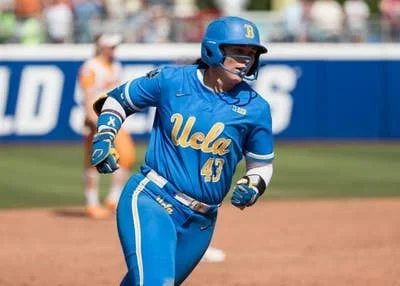
While bracket hosts and softball experts Beth Mowins, Jessica Mendoza, Michele Smith, and Amanda Scarborough seemed pleased with the bracket, some contentious decisions are likely to frustrate fans. Most notably, UCLA earned the No. 8 seed over Florida State. Although the Bruins had a No. 7 RPI compared to the Seminoles’ No. 10, FSU had two more wins and an ACC tournament title.