
The second game of the CBA playoff series between Shanxi and Guangsha at Shanxi’s home court was expected to be a one-sided affair. After winning the first game on the road, Shanxi held the match point, and home fans were anticipating a sweep. But a single substitution decision in the second quarter turned the game’s trajectory completely upside down.
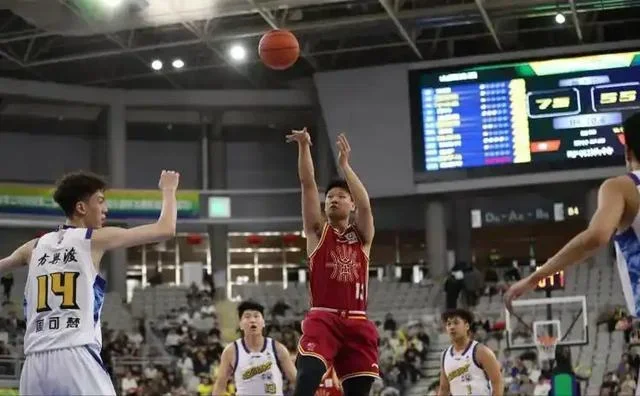
The turning point came when Shanxi, riding Liu Chuanxing’s dominant interior play, had Guangsha on the ropes. Liu’s defense stifled Hu Jinqiu, his offense was efficient near the basket, and he controlled the rebounds. By the end of the first quarter, Shanxi led by double digits. However, at the start of the second quarter, the two foreign imports, Nix and Knight, entered the game in poor form. Nix missed several three-pointers and committed three fouls, while Knight managed only three points and four fouls for the entire game. Despite this, head coach Pan Jiang kept them on the floor for nearly 20 minutes.
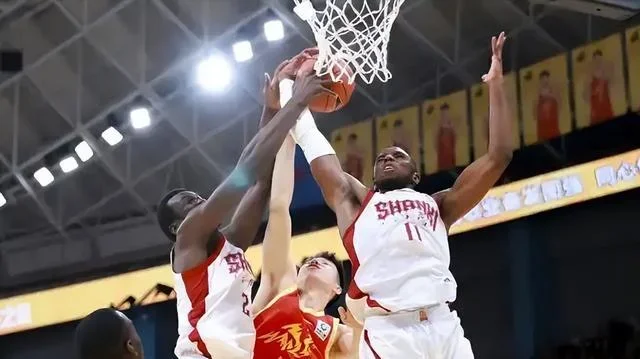
As Liu Chuanxing continued his hot streak, grabbing rebounds and finishing inside, the game was firmly in Shanxi’s hands. Then, surprisingly, Pan Jiang substituted Liu out, bringing in interior players like Ge Zhaobao and Jiao Hailong. The interior defense immediately collapsed, allowing Guangsha to grab multiple second-chance points and slowly erase the lead. With two minutes left in the fourth quarter and Shanxi still holding a slim lead, Pan finally remembered to use the in-form Diallo, but it was too late. Shanxi lost 81-86 at home, turning the series from 1-0 to 1-1 and losing control of the series.
It’s worth noting a common practice in CBA basketball: coaches usually inform players beforehand when substituting a hot performer, explaining reasons like rest or tactical adjustments. But Pan’s move seemed to lack that courtesy. Fans in the stands were shouting in confusion, wondering why the best player on the floor was taken off, and even the commentators expressed bewilderment.
The controversy extends beyond this single game, highlighting three deeper issues in the CBA. First is over-reliance on foreign players. Under the 4-per-quarter rule in the playoffs, many coaches hesitate to bench underperforming imports due to contract pressure and fear of criticism. In this game, the two foreign players combined for only 11 points and seven fouls, dragging down the team’s rhythm, yet Pan insisted on using them.
Second is the ingrained preference for foreign players over domestic talent. Liu Chuanxing was the most consistent player on the floor, but his minutes were cut short. In fact, aside from Liu, other domestic players on Shanxi performed decently, but their playing time was below the league average. The value of defensive-oriented players is often overlooked, similar to how Zhang Haojia’s high plus-minus in the Beijing-Guangdong game didn’t translate into scoring recognition.
Third is the changing dynamics of playoff rankings. This year’s CBA quarterfinals use a best-of-three format, giving the third-ranked Shanxi two home games against the sixth-ranked Guangsha. After losing Game 2, Shanxi now faces a decisive Game 3 on the road with little room for error. The league’s ranking logic has shifted from relying on a single star to evaluating overall roster depth. Beijing’s bench power in crushing Guangdong is a prime example. Shanxi’s loss also exposed their lack of bench depth once starters declined.
Pan Jiang himself is a former player who spent eight seasons as a guard for Shanxi. After retiring, he coached the youth team and then served as an assistant to Yang Xuezeng for four years before being promoted to head coach last season. This mirrors the career path of many young coaches. However, his substitution decisions revealed inexperience in tactical adjustments and hesitation to change rotation strategies. While former players like Wang Zhizhi, Li Nan, and Yang Xuezeng have succeeded as coaches, younger ones often stick to outdated habits and fail to break established rotation patterns.
Similar controversies are not new in the CBA. This season, Du Feng’s communication with referees during the Beijing-Guangdong series led to missed adjustment time. Last season, a Zhejiang team coach’s overuse of imports led to interior collapse and series loss, sparking fan outrage. Shanxi’s home loss to Guangsha not only made the series competitive but also ignited nationwide debate over coach rotations and development of domestic players.
What seemed like a momentary coaching mistake actually reflects long-standing problems in the league. Shanxi’s Game 3 will be a do-or-die battle, and only by adjusting rotation and activating domestic talent can they turn the series around. The CBA as a whole needs to improve by, for example, publicly explaining coaches’ rotation logic and providing more opportunities for domestic players to grow. Fans hope the playoffs will feature less controversy and more pure basketball, with the league evolving through each discussion.